
Top Signs You Need Chimney Cleaning Service – Don’t Ignore These
Most homeowners wait for a sign before they book a sweep. A smoke smell, a soot streak, something visibly wrong. The trouble is that the worst chimney condition we find, glazed creosote, often shows nothing at all from the living room. The signs are real, but some of them sit inside the flue where you won’t see them without a light and a mirror. So here’s the honest split: the signs worth acting on, the ones people misread, and the one trigger that overrides symptom-watching entirely. If you’d rather not guess, call (877) 792-7321 and we’ll take a look.
Why the Signs You’re Waiting For Often Come Too Late
A chimney fire doesn’t need a visible mess to start. It needs a fuel load and a hot enough spark, and glazed creosote is an efficient fuel. That’s the uncomfortable part of symptom-based thinking: you can have a flue that draws well, glass that looks clean, and a firebox with no soot pile, and still have a dangerous deposit baking onto the liner walls. In our experience across Black Rock, the chimneys that surprise people are the quiet ones.
This is the reframe we want you to take away. Symptom-watching is a lagging indicator. It tells you something already went wrong. Scheduled inspection is a leading indicator. It tells you what’s actually happening inside the flue before it becomes a problem you can smell or see. That’s why the annual inspection matters more than any single sign you might notice:
- It catches creosote buildup in all three stages, including glazed Stage 3 that produces no visible sign in the room.
- It checks the parts you can’t see: liner, crown, cap, and the mortar joints between masonry courses.
- It gives you a documented baseline you can compare against next year, which is how you catch gradual wear.
You don’t have to schedule an inspection because you suspect something is wrong. You schedule it so you can stop suspecting.
Which Signs Are Genuinely Reliable?
Plenty of “signs” floating around are guesswork. These are the ones we trust, because each one corresponds to a physical process we can confirm on inspection. None of them requires special equipment to notice, which is why they’re worth knowing.
- Creosote flaking down into the firebox. Stage 1 creosote is the crumbly, soot-like deposit. When it starts sheeting off the flue walls and landing in the firebox, that’s a flue that has built enough deposit to begin shedding. It’s the visible stage, and the easiest moment to act.
- A strong odor on humid days. Creosote and soot hold moisture. On a damp day, a chimney that’s due for sweeping will push that smell back into the room, a sharp, tar-like odor you notice the moment you walk in. If it’s worse in summer humidity, that’s a real signal, not imagination.
- Visible efflorescence on the exterior. White, powdery staining on the outside brick isn’t dirt. It’s mineral salts left behind as water moves through the masonry and evaporates. It tells you moisture is getting in, usually through a failing crown or cap, and moisture and creosote make a bad combination. That’s also why we treat chimney cap & crown work as core maintenance rather than cosmetic repair.
If you see any of these three at your Black Rock home, the flue is telling you something. It’s worth a look before the next burning season.
Two Signs People Misread, and Why
The two most common reasons homeowners skip a sweep are “it draws fine” and “the glass is clean.” Both are reassuring and both are irrelevant to flue cleanliness. Here’s why.
A good draw doesn’t mean a clean flue. Draft is a function of temperature difference and pressure, not deposit thickness. A flue with a substantial creosote load can still pull smoke up and out perfectly well. In fact, a hot, efficient fire in a dirty flue is exactly the condition that ignites glazed creosote. So a strong draw tells you the chimney is moving air. It tells you nothing about what’s coating the walls.
Clean glass doesn’t mean a clean flue. What you see through the glass door is the firebox and the immediate fire area. The flue starts above that and runs the full height of the chimney. The two are separate zones with separate conditions. A gas set with clean glass can have a flue with debris or animal material several feet up. A wood fireplace with spotless glass can have a liner coated in Stage 2 creosote.
Treat draft and cleanliness as independent variables and the confusion disappears. You can’t infer one from the other, and no amount of watching the fire tells you what’s going on inside the pipe.
What Glazed Creosote Actually Looks Like Inside the Flue
If you do look up the flue, here’s what you’re looking for. Stage 3 creosote is glazed, hard, and shiny, like a coat of black lacquer or hardened tar fused to the liner walls. It doesn’t crumble. It doesn’t sweep off with a brush. It’s the product of repeated hot fires on top of an already-deposited layer, which is why it concentrates in flues that get heavy use with less-than-ideal fuel or airflow.
Here’s why we don’t advise homeowners to inspect it themselves. Looking up a flue safely takes a proper light, a mirror, the right angle, and, frankly, the willingness to lean into an opening that may have loose soot waiting to come down. Without that setup, you see the first few feet and assume the rest is the same. It usually isn’t. Stage 3 sits higher up, often above a bend or offset where a straight look won’t reach.
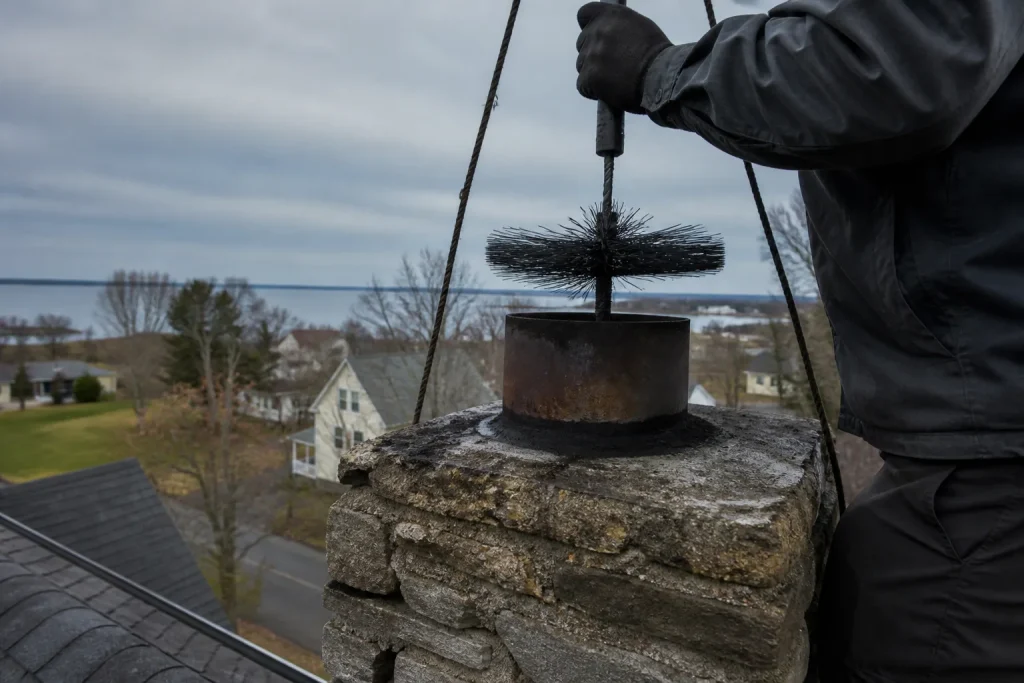
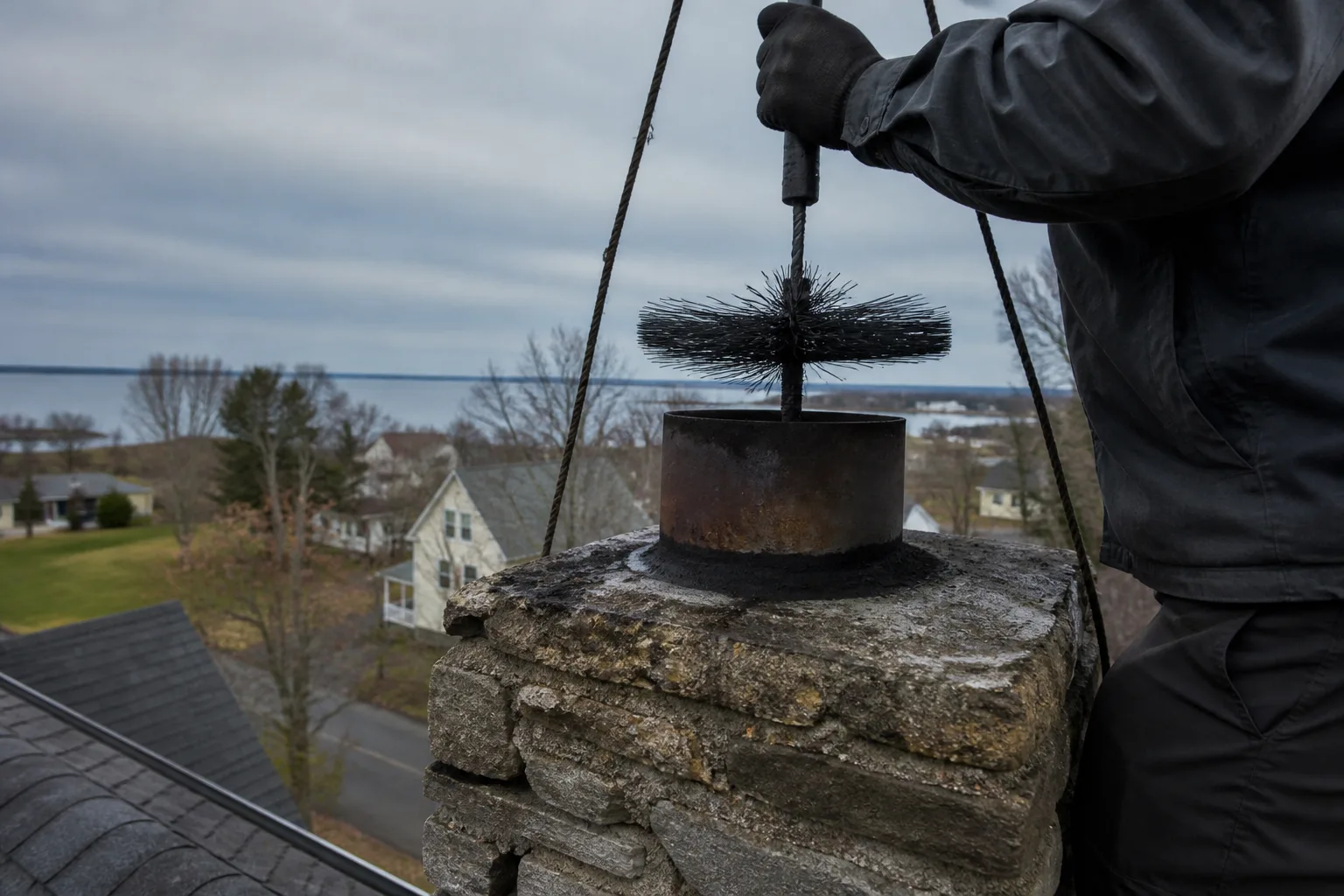
When we find glazed creosote, a brush alone won’t touch it. That’s where the professional-grade side of our work comes in. We carry HeatShield resurfacing capability, which restores a deteriorating flue from the inside without tearing out masonry, and DuraFlex flexible liner systems for offset or aged flue configurations a rigid liner can’t navigate. Most sweep-only operations don’t have either. If the deposit has compromised the liner, the job is bigger than a cleaning, and it’s the kind of thing that’s cheaper to catch early. In Black Rock, we’ve seen plenty of chimneys where a cracked crown today became a liner failure a few seasons later. That’s why we handle the whole system under one roof, from chimney sweep through chimney repair, with no handoff between the company that finds the problem and the one that fixes it.
Animal and Debris Blockage: Signs People Mistake for Draft Problems
Birds, squirrels, and raccoons love an open flue, and a missing or damaged cap is an invitation. The signs of a physical obstruction get misread constantly, usually as “the chimney stopped drawing.” A cap and screen is the cheap insurance against this, and it’s why we always check the cap condition on inspection.
Watch for these, which point to a blockage rather than a draft or deposit issue:
- Smoke that refuses to go up, or rolls back into the room. A sudden change in smoke behavior, especially when the fire isn’t otherwise struggling, often means something is physically in the flue.
- Scratching, fluttering, or chirping sounds from the chimney. If you hear movement or bird calls, you likely have a nest or a trapped animal. Don’t light a fire to drive it out.
- Debris in the firebox that isn’t soot or creosote. Twigs, nesting material, or leaves are a direct sign of intrusion from above.
An obstruction is the one case where you should stop using the fireplace immediately and call. We answer 24/7. A call outside dispatch hours is booked into the next opening, Sunday through Friday, 7am to 7pm.
When to Call a Pro
Some of these signs mean “schedule a sweep.” Others mean “stop burning and get someone out.” A flaking creosote pile, a persistent odor on humid days, or efflorescence on the exterior all justify a call, but they’re not emergencies. Rolling smoke, animal sounds, debris in the firebox, or any sign you can’t explain are reasons to stop and have it looked at now. Creosote fires and carbon monoxide are the risks behind all of this, and neither one announces itself politely. Our technicians have up to 8 years of experience, and inspections are a standalone service, so you can get an honest assessment of what’s actually happening before committing to any repair.
Related services in Black Rock: if a sweep or inspection turns up something structural, we also handle chimney repair and full inspections. If you’re starting from scratch, Chimney Sweep Black Rock is the place to begin.
The Bottom Line
The signs worth trusting are Stage 1 creosote falling into the firebox, a sharp odor on humid days, and efflorescence on your exterior brick. The signs to ignore are a good draw and clean glass, because neither tells you anything about flue condition. And the one trigger that beats all symptom-watching is the annual inspection, which catches what you can’t see and what won’t announce itself until it’s a problem. If you’re in Black Rock and need help, Chimney Sweep Black Rock offers free estimates. Call (877) 792-7321. We answer 24/7, with fast dispatch from 7am to 7pm, Sunday through Friday.
Frequently Asked Questions
Look for Stage 1 creosote flaking into the firebox, a strong tar-like odor on humid days, or white efflorescence on the exterior brick. Those are reliable. A good draw or clean glass does not mean the flue is clean, so if you’re relying on those alone, book an inspection instead. Call (877) 792-7321 for a free estimate if you want a straight answer.
Usually not. Stage 3 glazed creosote sits higher in the flue and produces no visible sign in the room, and looking up the flue safely requires a proper light and mirror at the right angle. It looks like shiny black lacquer fused to the liner walls. Don’t try to check it yourself. An inspection is how you confirm it. Call (877) 792-7321 to schedule one.
Yes, if it’s been more than a year. Draft and cleanliness are independent. A dirty flue can draw perfectly well, and a hot fire in a dirty flue is exactly what ignites creosote. Clean glass tells you about the firebox, not the flue. An annual inspection is the only reliable check. Call (877) 792-7321 to book one.
Scratching, fluttering, chirping, or rustling from the chimney is the clearest sign of an animal or nest. Along with debris in the firebox or smoke that suddenly rolls back into the room, it points to a physical obstruction rather than a draft issue. Don’t light a fire to clear it. Call (877) 792-7321, and we answer 24/7.
Written by the team at Chimney Sweep Black Rock.
Need Chimney Cleaning Help?
Call Chimney Sweep Black Rock - the local pro we connect you with is licensed and insured, here with fast help in Black Rock.
(877) 792-7321