
Last updated November 24, 2026
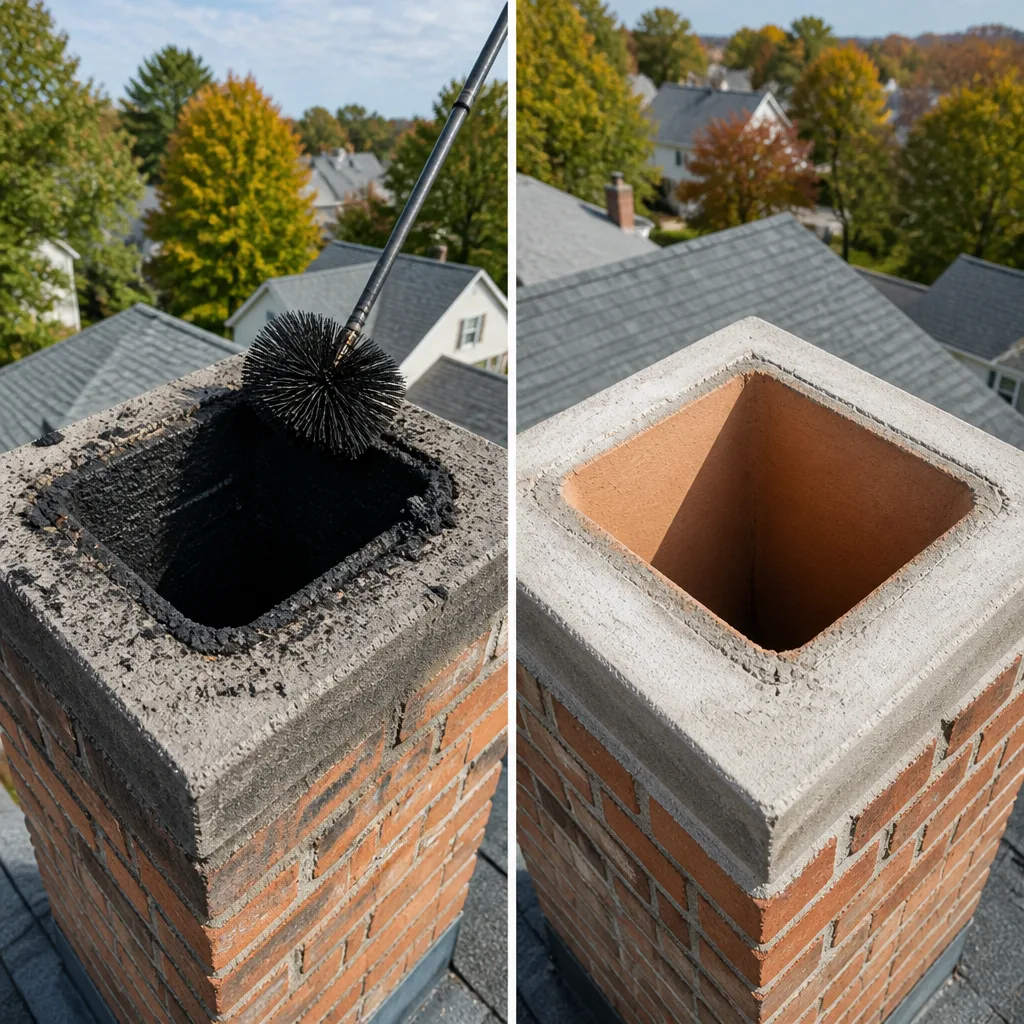 Sweep & inspection
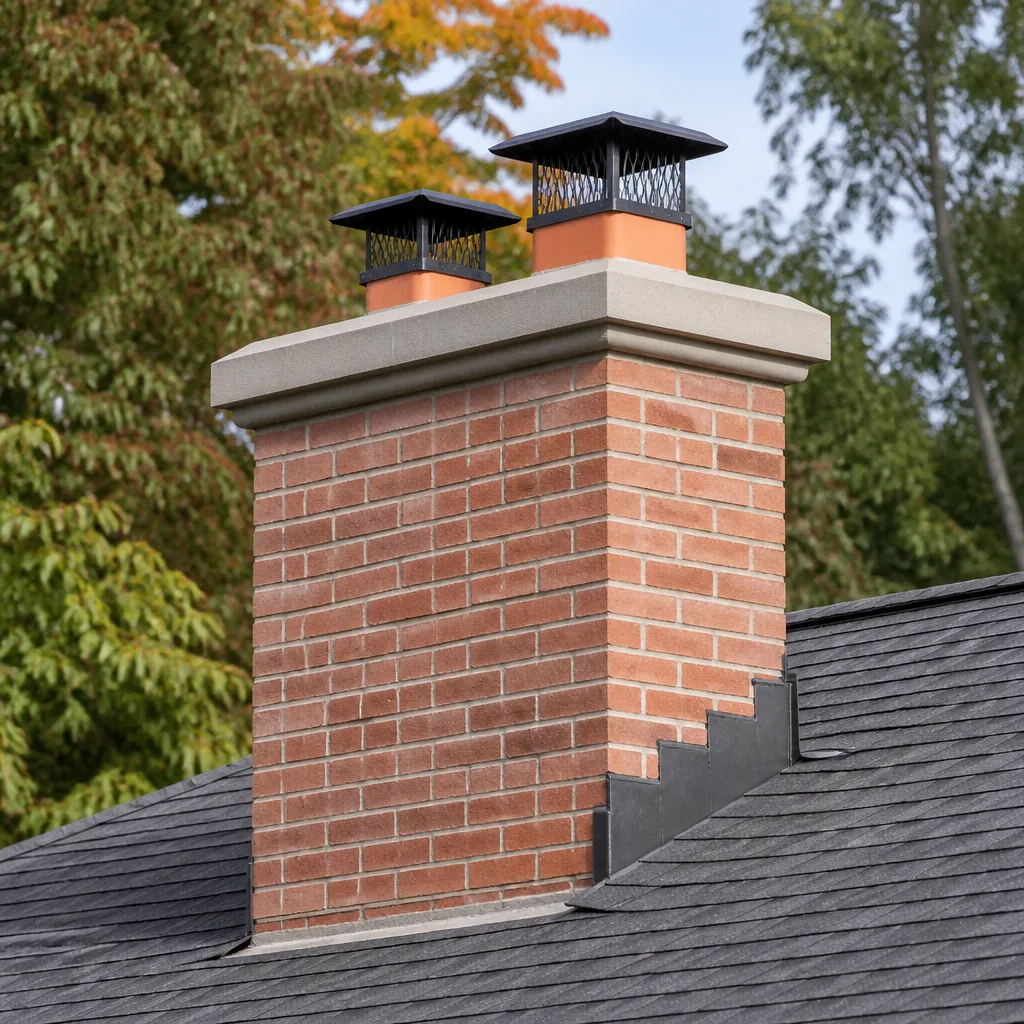 Caps & crowns
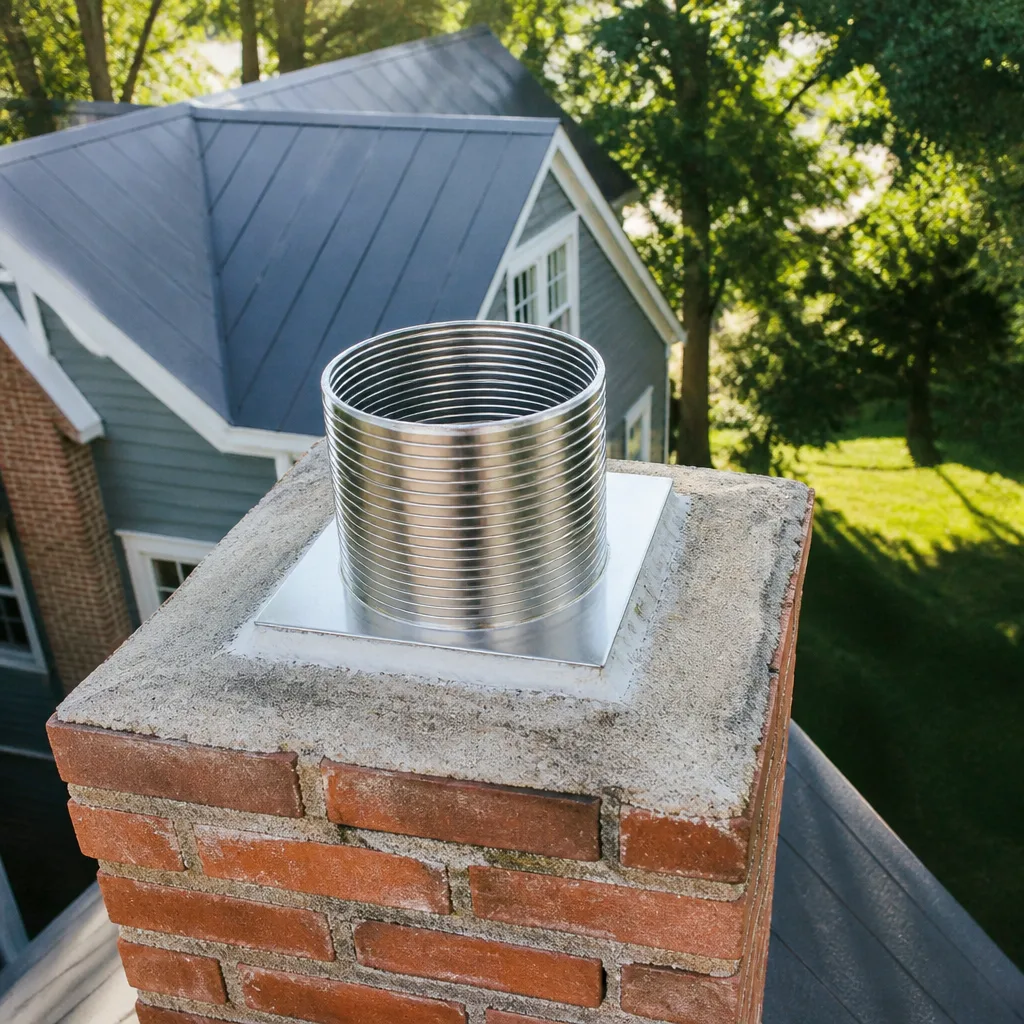 Flue relining
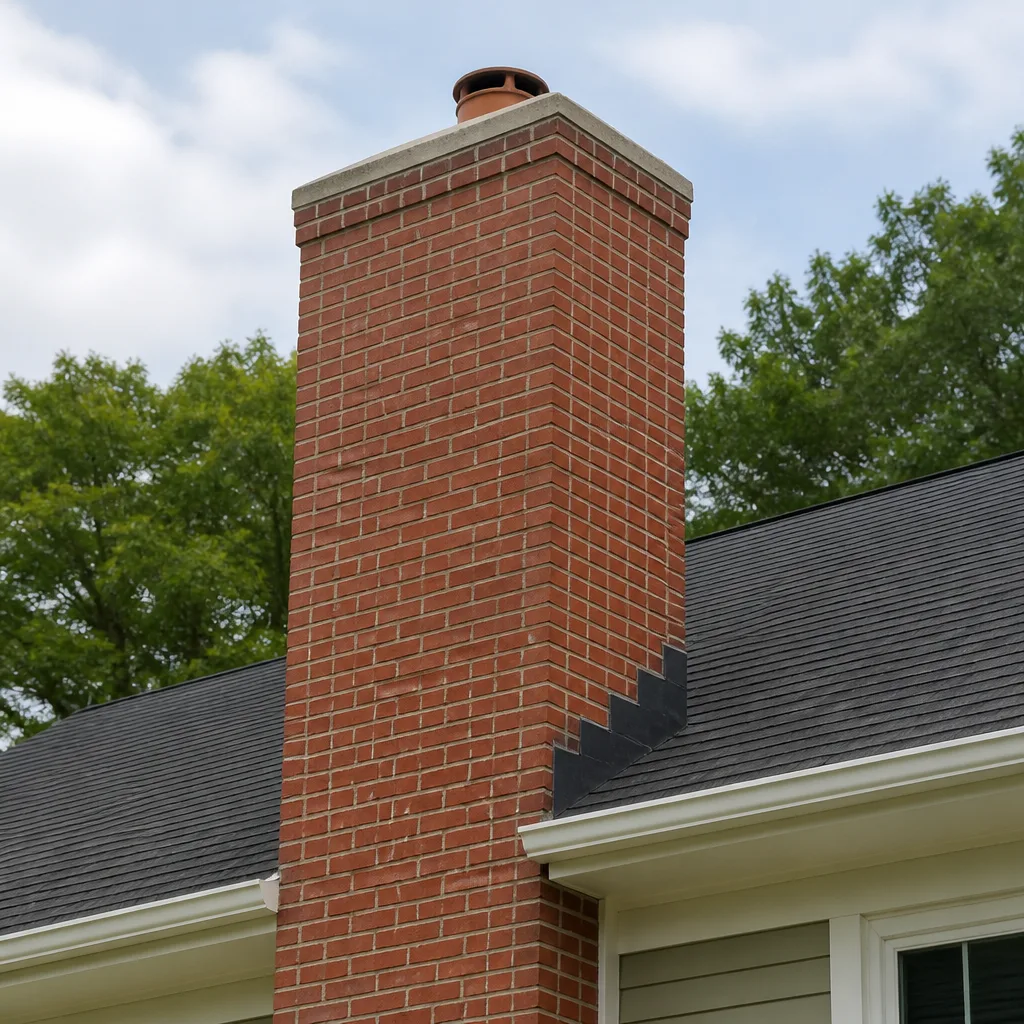 Masonry repair
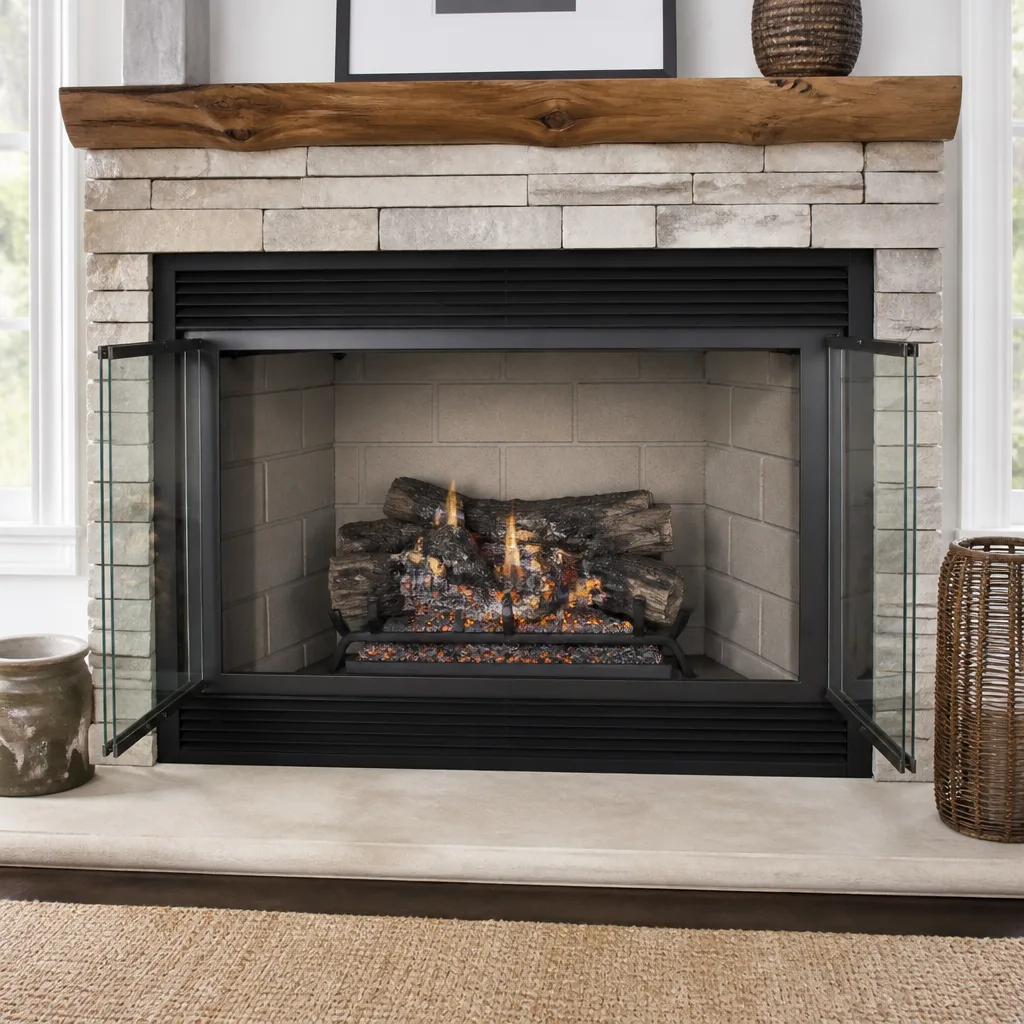 Gas fireplace service
Level 1 sweep and inspection to the NFPA 211 annual standard - flue, crown, cap, and flashing checked and photographed
Chimney sweep logs do not sweep chimneys. They loosen some creosote - which then falls where a brush and vacuum still have to collect it.
Chimney Cleaning Warning Signs: A Black Rock Homeowner’s Reference Guide
A white stain running down the outside of your chimney isn’t a cosmetic issue. It’s called efflorescence, and it’s liquid water moving through your masonry. Your brick is absorbing moisture that will freeze, expand, and crack from the inside out. Homeowners notice the obvious warning signs: black smoke backing up, a wash of soot, a smell that won’t clear. What they miss are the quiet signals, the ones that point to liner or structural problems no cleaning will fix. This guide from our Black Rock team splits the warning signs into those two categories so you know what’s urgent and what can wait for a scheduled appointment.
Quick Answer
The warning signs that your chimney needs attention fall into two groups: cleaning signs (heavy creosote, soot backup, poor draft) and repair signs (efflorescence, spalling brick, rusted damper, crumbling crown). Repair signs matter more because a cleaning passes right over them. If your fireplace smokes persistently, the firebox or damper is rusted through, or chunks of masonry land in the firebox, stop using the fireplace and get an inspection before you burn again.
Styles & brands we work with
- Sweep & inspection
- Caps & crowns
- Flue relining
- Masonry repair
- Gas fireplace service
Table of Contents
- What the outside of your chimney tells you from the ground
- Interior and firebox signs that get misread as normal
- Odor diagnostics: reading the smell
- Performance signs: smoking, slow starts, poor draft
- Signs that mean stop burning now vs. signs that can wait
- What a full chimney inspection covers that a sweep doesn’t
- How Black Rock weather shapes chimney wear
- How often to schedule maintenance
What the Outside of Your Chimney Tells You From the Ground
You can read a lot about a chimney’s condition standing at the base and looking up. Several of the most serious warning signs are visible from the ground without a ladder. What you’re scanning for is moisture evidence and structural movement, not just soot.
Here’s what each exterior sign specifically indicates:
- White staining (efflorescence). A powdery white haze or chalky streak on the brick means water has moved through the masonry and left mineral salts behind as it dried. It signals an active leak path, often through a failing crown or a missing cap. Left alone, that trapped water freezes in cold weather and pries brick and mortar apart.
- Spalling brick. When brick faces pop, flake, or crumble, the water cycle has already done damage. The masonry is breaking down from the inside.
- A cracked or crumbling crown. The crown is the sloped concrete or mortar cap at the very top. Hairline cracks become real gaps that funnel water straight into the flue.
- Missing or damaged cap. A chimney cap keeps rain, animals, and debris out of the flue. A missing cap is one of the most common sources of water intrusion we see.
- A leaning or tilted chimney. Any real lean in the stack points to a structural issue that needs eyes on it.
- Broken flue tiles at the top. If you can see the flue tiles from the ground, a cracked or missing tile up top often means the liner is compromised further down.
These are exactly the signs chimney cap & crown work addresses. A cracked crown today becomes a liner failure tomorrow, and the repair gets more involved at every step.
Interior and Firebox Signs That Get Misread as Normal
Inside the firebox and up near the damper, several warning signs get waved off as “just how chimneys look.” They aren’t. Here’s what homeowners routinely misread and what those signs actually point to.
Rust on the damper or firebox metal
Rust means moisture, and the damper sits where water collects when it gets in from above. A damper that’s stiff, rusted, or won’t seat is a water-intrusion symptom, not a lubrication problem.
White haze on the firebrick
A white film or crust on the firebrick is a moisture signature on the interior side. It tells you water is moving through the system, often the same water causing the exterior staining.
Spalling debris in the firebox
Flakes of masonry, mortar crumbs, or pieces of flue tile landing in the firebox are serious. They mean the liner or the masonry around it is deteriorating and shedding material.
Black, glassy creosote in the flue
Creosote in its glazed, hardened stage is the fuel for a chimney fire. Heavy, crusty buildup in a flue is a cleaning problem, but it’s the kind you don’t defer through burning season.
Loose or missing mortar joints
Crumbling mortar between the brick inside or around the firebox is the same water-and-freeze cycle at work. It’s a repair sign, not a sweep sign.
What separates a cleaning from a repair is what’s found during an inspection. We work with professional-grade brands such as HeatShield and Copperfield, materials specified by chimney engineers rather than stocked at the hardware store.
Odor Diagnostics: Reading the Smell
Your nose is a genuinely useful diagnostic tool, and most homeowners haven’t learned to use it. Different chimney problems produce distinctly different smells, and each points to a different cause.
- A sharp, acrid, campfire smell. This is creosote buildup in the flue, the smell of unburned combustion byproducts accumulating. It gets stronger after a burn, especially when the firebox cools and the draft dies down.
- A musty, damp, or earthy smell. This is water intrusion. Somewhere moisture is getting into the masonry or the flue, and the efflorescence or rusted damper you may have spotted from outside is the matching clue.
- A strong, foul animal smell. Birds, squirrels, and other wildlife nest in open flues. A missing chimney cap is the usual entry point, and the smell plus scratching sounds confirm the tenant.
- Smoke smell backdrafting into the room. If the room smells smoky without the fire, the chimney isn’t drafting properly. That can point to a blocked flue, a damper left partly closed, or negative air pressure pulling air down the chimney.
Negative air pressure is the one homeowners most often misdiagnose. A tightly sealed house with an exhaust fan running, or another appliance competing for combustion air, can pull smoke and odor back down a perfectly clean flue. The fix there is about air, not masonry.
Performance Signs: Smoking, Slow Starts, Poor Draft
How your fire behaves tells you about the condition of the chimney behind it. Three performance problems cover most of what we see, and each has a set of chimney conditions that commonly cause it.
The fireplace smokes into the room
Smoke backing up usually comes down to a blocked flue, a closed or partly closed damper, an interior chimney that’s too cold to start a draft, or a flue that’s undersized for the firebox opening. A full inspection separates these causes so you fix the right one.
Fires that are slow to start or won’t catch
If your fires struggle to draw, a cold flue is a common culprit: the column of air inside hasn’t warmed enough to pull upward. But a blocked or partially blocked flue, heavy creosote, or a collapsed liner inside the stack produces the same symptom. Don’t assume it’s the wood.
Weak, drifting draft
A fire that burns lazy and smolders instead of roaring is telling you the draft is weak. Undersized flues, leaks, and heavy buildup all cause it. Weak draft is a warning sign because it means combustion gases are lingering in the flue longer than they should.
These performance signs don’t always mean a structural repair. But a clean chimney that still smokes points to a real issue rather than buildup, and that’s where a sweep alone won’t solve it. The chimney repair side of our work exists for exactly these cases.
Signs That Mean Stop Burning Now vs. Signs That Can Wait
One of the most useful distinctions a homeowner can carry: which warning signs are an immediate stop-burning signal, and which can wait for a scheduled appointment. Getting this wrong in either direction causes trouble: either you burn when you shouldn’t, or you worry needlessly and skip a routine sweep.
Stop using the fireplace now if you see:
- Creosote burning inside the flue (a chimney fire can run silently, and you may hear roaring or popping)
- Masonry or flue material falling into the firebox
- A damper or firebox that is rusted through
- Persistent smoke backing into the room that doesn’t clear when you adjust the fire
- A chimney that’s leaning, or visible holes in the flue
- Physical damage to the crown or a missing cap that lets water straight into the flue
These can usually wait for a scheduled appointment:
- Light efflorescence with no spalling
- A cap that’s slightly loose but still seated
- Moderate creosote buildup and a smoky smell after a fire
- Minor mortar cracks in the firebox surround
When in doubt, the safe move is a stop and an inspection rather than a guess. A chimney with an unknown flue condition isn’t the place to hope.
What a Full Chimney Inspection Covers That a Sweep Doesn’t
A sweep and an inspection are not the same job. A sweep removes buildup. An inspection reads the condition of the whole system: the flue, liner, crown, cap, firebox, and surrounding masonry. That’s why we offer chimney inspections as a standalone service, giving you an honest assessment before you commit to any repair.
Here’s how the inspection side works in practice:
- Exterior read. We check the crown, cap, flue top, and masonry for the exterior warning signs above.
- Interior and firebox check. We look at the damper, firebrick, mortar joints, and what’s landing in the firebox.
- Flue assessment. We evaluate the liner and the condition of the flue from end to end.
- Report and scope. You get a clear picture of what’s a cleaning issue, what’s a repair issue, and what can safely wait.
That last point is the accountability piece. The company that finds the problem should be the company that fixes it, with no finger-pointing between an inspection vendor and a repair vendor. Our scope covers the entire chimney, and we use professional-grade systems such as DuraFlex flexible liners to handle complex, offset, or older flue configurations that rigid systems can’t navigate. We can also restore a deteriorating flue with HeatShield resurfacing instead of a full liner replacement, which keeps a repair non-invasive where the flue condition allows it.
How Black Rock Weather Shapes Chimney Wear
The weather cycle that does the most chimney damage isn’t the hottest or the coldest day of the year. It’s the freeze-thaw cycle in between. In Black Rock, moisture that gets into masonry, mortar, or the crown expands as it freezes overnight and contracts as it thaws, and that repeated cycle is what cracks brick, spalls the surface, and loosens joints. It’s also why an open flue or a compromised cap in this region tends to show its damage faster than a homeowner expects.
The practical read: the same water intrusion that produces a white stain in milder weather starts splitting brick by the next cold snap. Handling a cracked crown or a missing cap before that cycle starts is cheaper than handling it after. That cycle is also the reason we look at the crown and cap with the same attention we give the flue itself.
For Black Rock homeowners, the seasonal logic is straightforward: get the sweep and inspection done before burning season begins, so any repair lands while there’s still time to finish it before the cold sets in.
How Often to Schedule Maintenance
Routine maintenance is far less expensive than remediation, and the schedule depends on how much you burn. As a reasonable guide:
- Annual sweep and inspection if you burn regularly through the year. This is the baseline for a wood-burning fireplace.
- A cleaning whenever buildup is heavy or visible, regardless of the calendar. Creosote doesn’t wait for a year to pass.
- An inspection before each burning season in Black Rock, given the freeze-thaw wear, so any water intrusion or liner problem is handled before it’s a cold-season emergency.
- Prompt attention when a warning sign appears, even between scheduled visits. A cracked crown left alone becomes a liner failure.
Our technicians have up to 8 years of experience reading exactly these signs, and a scheduled sweep with our chimney sweep service is the step that catches them early. If you’re not sure where your chimney stands, an inspection you can see for yourself is the place to start.
Common Mistakes to Avoid
- Treating efflorescence as cosmetic. That white staining means water is moving through the masonry, and painting or sealing over it without fixing the source just traps the moisture.
- Assuming a sweep fixes everything. A cleaning removes buildup but passes right over a cracked crown or a damaged liner. Repair signs need an inspection, not a sweep.
- Deferring through burning season. A white stain or a smoky smell today can become a real repair by the next Black Rock freeze. Chimney problems don’t get cheaper with time.
- Burning with an unknown flue. If you haven’t had the flue inspected, don’t assume it’s sound just because nothing has happened yet.
- Ignoring a missing cap. A missing chimney cap lets in rain, debris, and animals; it’s one of the most common sources of water intrusion we see.
- Mistaking negative air pressure for a dirty flue. Backdrafting smoke doesn’t always mean buildup, so fix the actual cause rather than guessing.
- Hiring a sweep-only operation for a repair problem. When the sign points past cleaning, you want one company that inspects and repairs, with no gap to shift blame through.
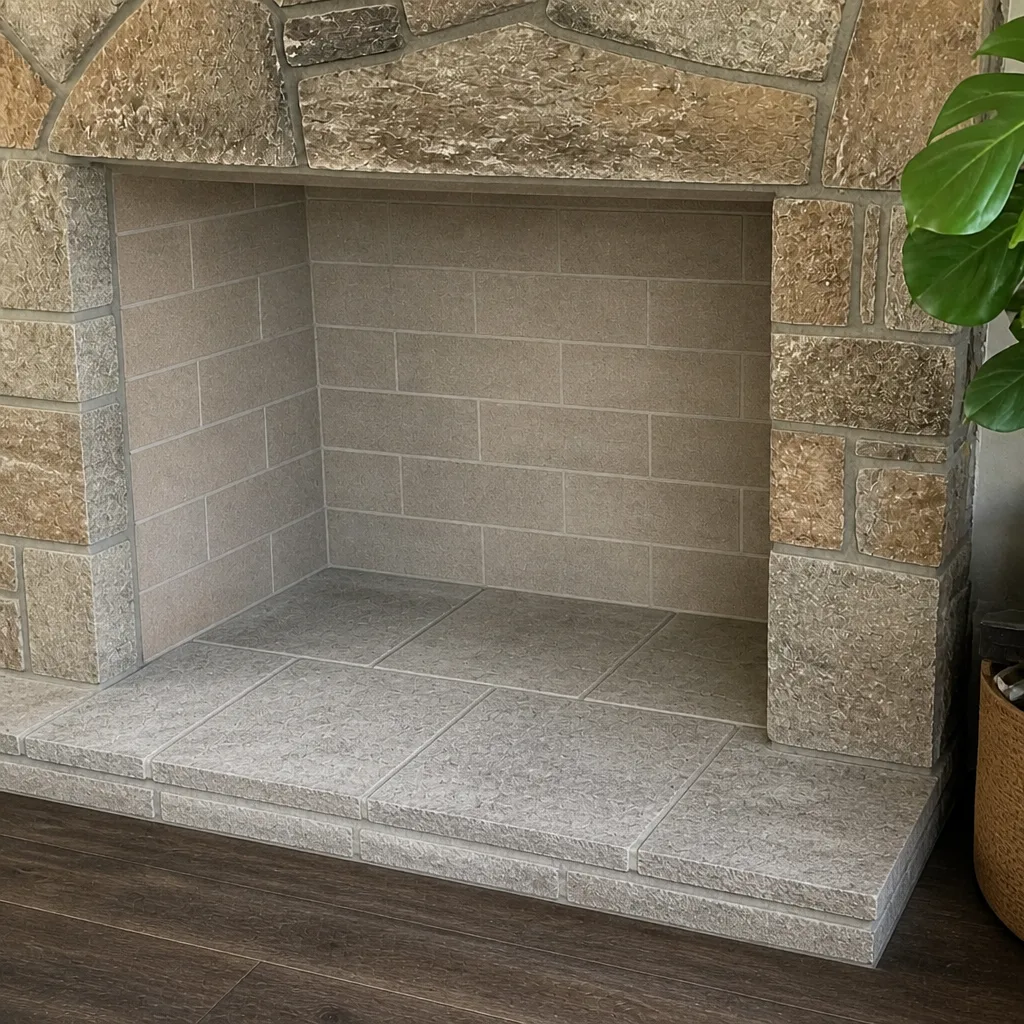
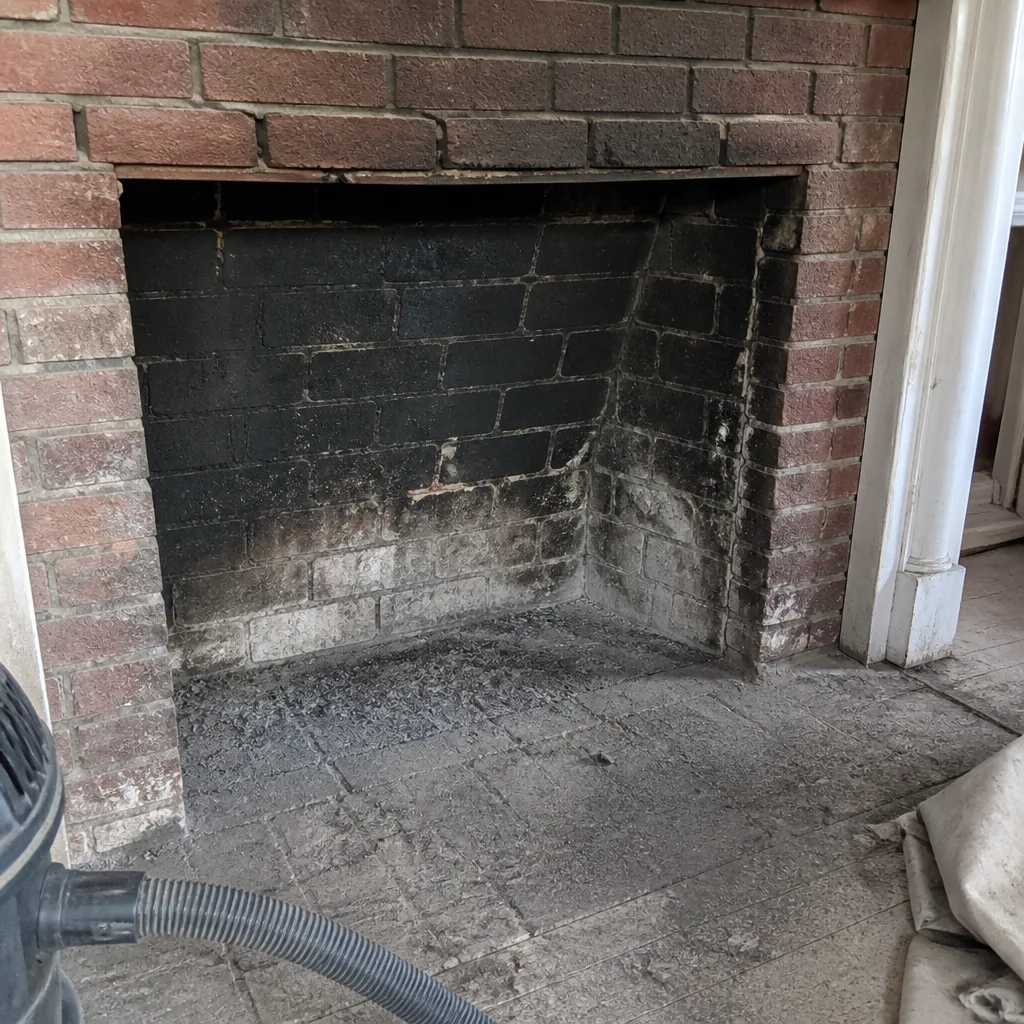
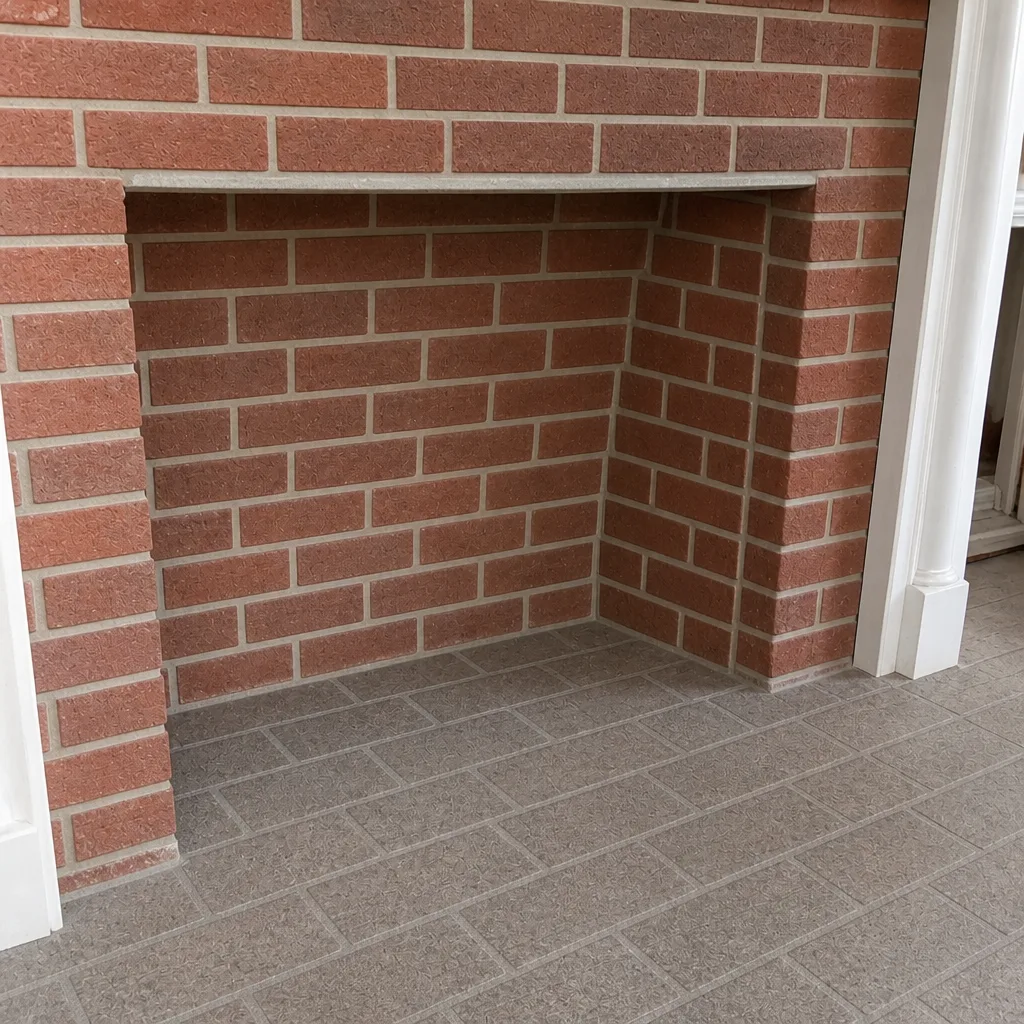
See the difference
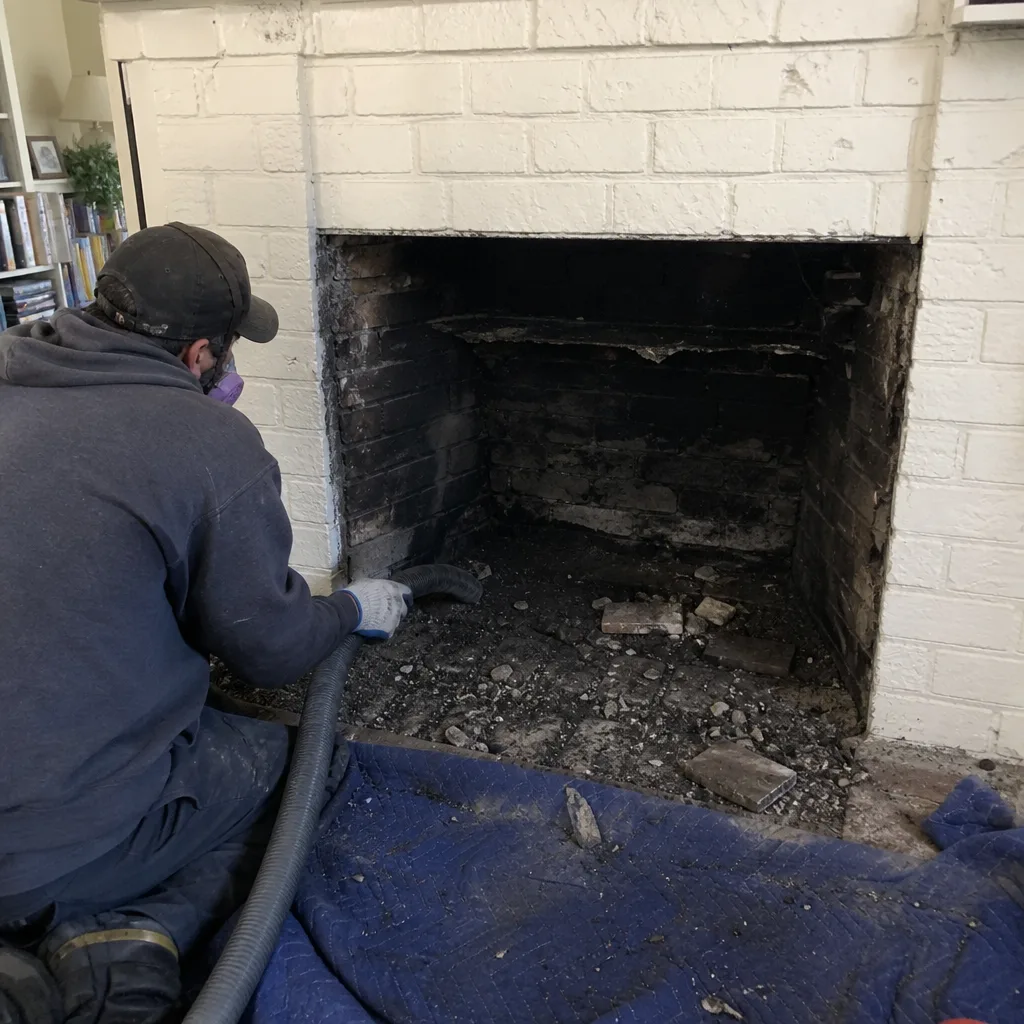 Before
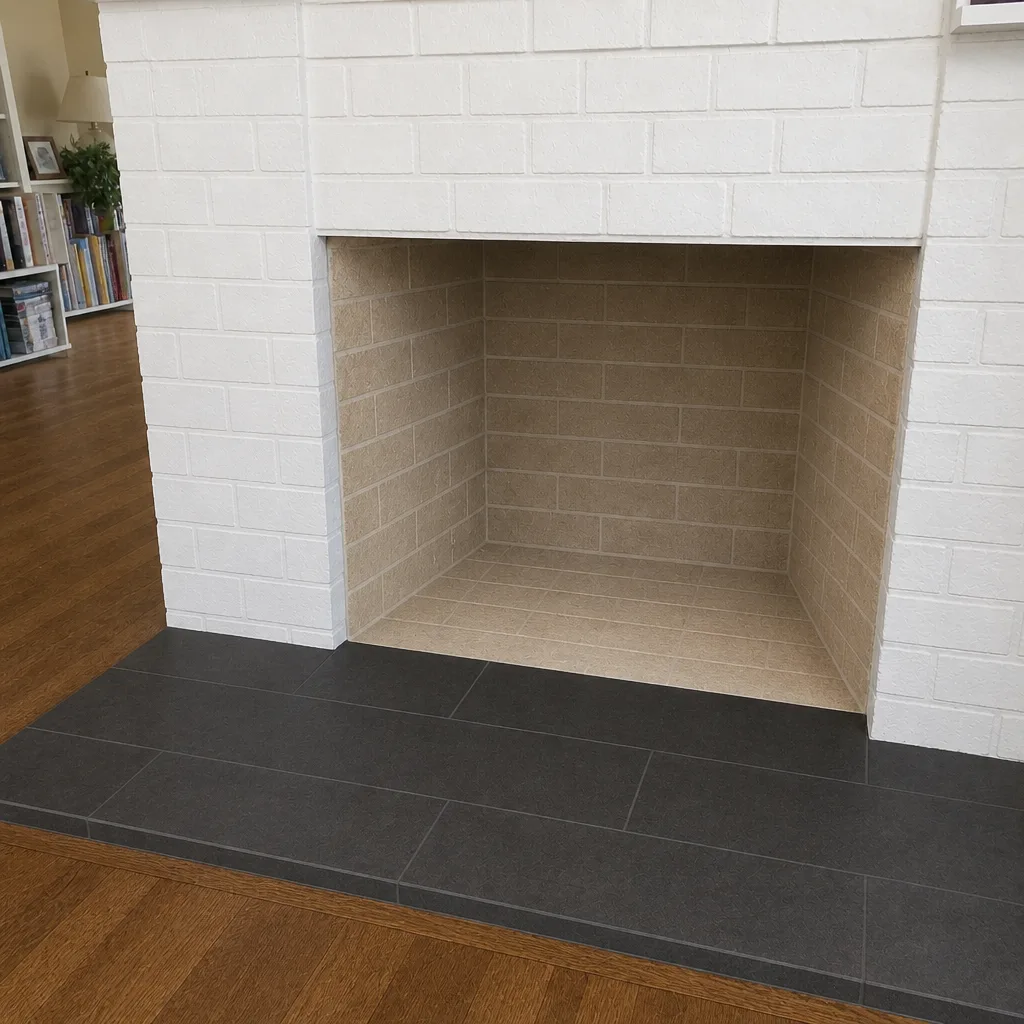 After
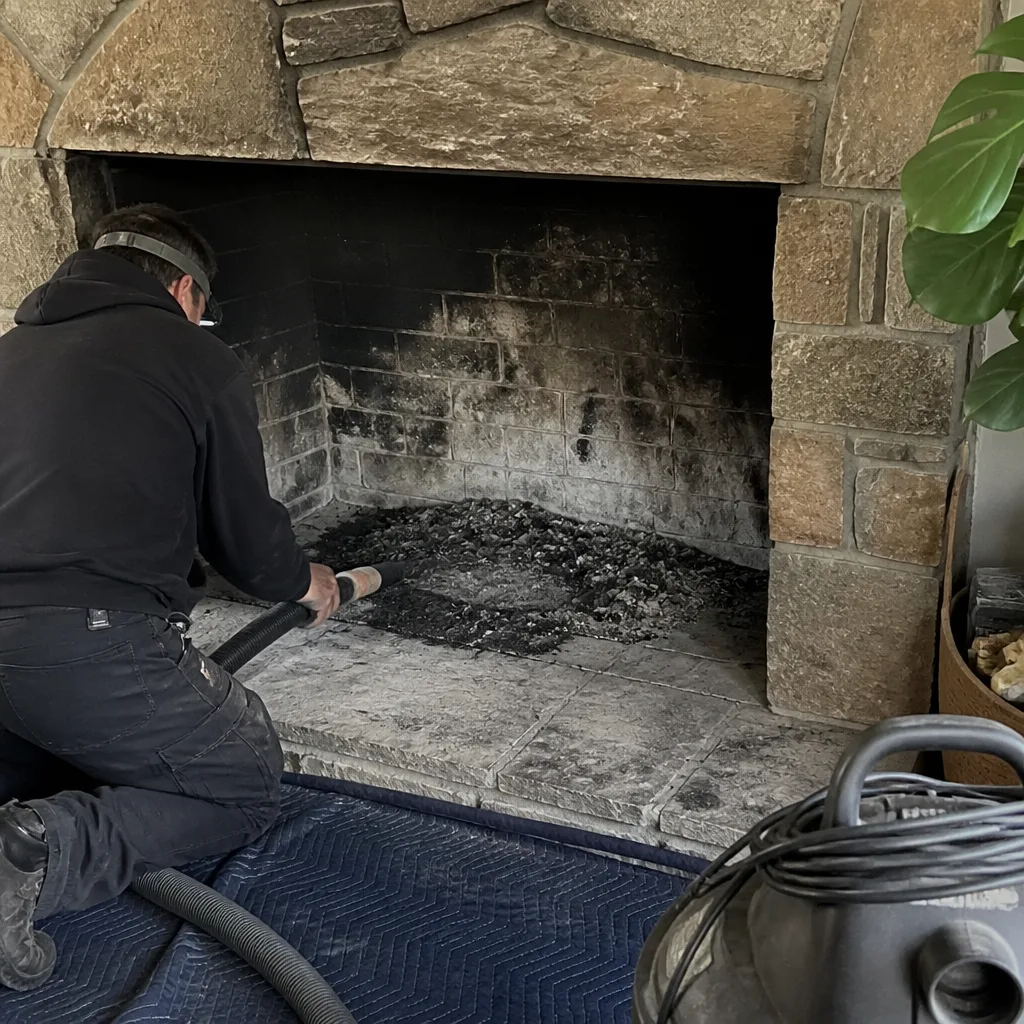 Before
 After
 Before
 After
When to Call a Professional
Call a professional if you see any stop-burning sign: creosote burning in the flue, masonry landing in the firebox, a rusted-through damper, persistent smoke, a leaning stack, or a compromised crown or missing cap. Call us before your next burning season even if everything looks fine, so a real inspection can catch the quiet problems before they grow. And call when the smell changes, since odor is one of the most reliable early warning signs. Chimney Sweep Black Rock offers free estimates in Black Rock: call (877) 792-7321. We answer 24/7. Fast dispatch from 7am to 7pm, Sunday through Friday.
Frequently Asked Questions
The most important signs are the repair signals, not the obvious soot: efflorescence, spalling brick, a crumbling crown, a rusted damper, and material landing in the firebox. These point to liner or structural problems that a routine cleaning won’t fix. Call (877) 792-7321 for an exact quote; estimates are free.
We recommend an annual sweep and inspection for a regularly used fireplace. If you notice heavy or glazed creosote before that year is up, schedule a cleaning sooner, because buildup doesn’t wait for the calendar. Call (877) 792-7321 for an exact quote; estimates are free.
White staining is efflorescence, which means water is moving through the masonry and leaving mineral deposits as it dries. It signals an active leak path, often through a cracked crown or a missing cap. Fixing the source protects the brick before freeze-thaw damage splits it.
Buildup can ignite, and quiet structural problems that an inspection would have caught can progress into real repairs. A cracked crown left alone becomes a liner failure, and masonry that’s absorbing water keeps absorbing it through every freeze-thaw cycle. Getting eyes on the flue is what prevents that path. Call (877) 792-7321 for an exact quote; estimates are free.
A cleaning solves buildup; it doesn’t fix structural or liner damage. Efflorescence, spalling, a rusted damper, and debris in the firebox point to repair needs rather than cleaning, and a full inspection is what separates the two. You get a clear report so you’re never guessing which one you’re looking at.
Smoking and slow starts usually trace to one of three things: a cold flue that struggles to start a draft, buildup or a blocked flue, or a flue that’s undersized or leaking. Negative air pressure in a tightly sealed Black Rock home can produce the same symptom. An inspection tells you which one it is. Call (877) 792-7321 for an exact quote; estimates are free.
The Bottom Line
The signs you already know to watch for, soot and smoke and smell, are the start of the story, not the end. The warning signs that carry the real risk are the subtle ones: white staining on brick, a rusted damper, white haze on firebrick, masonry in the firebox, and a crown that’s quietly funneling water into the flue. Those point to problems a cleaning won’t solve. Know which signs mean stop burning and which can wait, inspect before every Black Rock burning season, and treat moisture as the enemy that feeds every other failure. Read the whole system, not just the soot. If you’re unsure, a visible inspection is the honest place to begin. Welcome to Chimney Sweep Black Rock, where one company handles your inspection and your repair with no finger-pointing in between.
Ready to know where your chimney actually stands? Call (877) 792-7321 for a free estimate. We answer 24/7. Fast dispatch from 7am to 7pm, Sunday through Friday, closed Saturday.
Written by the team at Chimney Sweep Black Rock.